Complete Guide to Wow Classes: Roles, Specs, and Playstyles in World of Warcraft
World of Warcraft remains one of the most enduring massively multiplayer online role-playing games, and at the heart of every player’s experience lie the available character options. Understanding the full range of wow classes is essential for both newcomers creating their first character and veterans looking to expand their roster or adapt to new expansions. Each class offers distinct fantasy themes, combat styles, resource systems, and roles in group content such as dungeons, raids, Mythic+, and player-versus-player battles. This guide provides a thorough overview of all thirteen playable options, their specializations, strengths, weaknesses, and practical advice for selection and progression.
Overview of Playable Options in Modern World of Warcraft
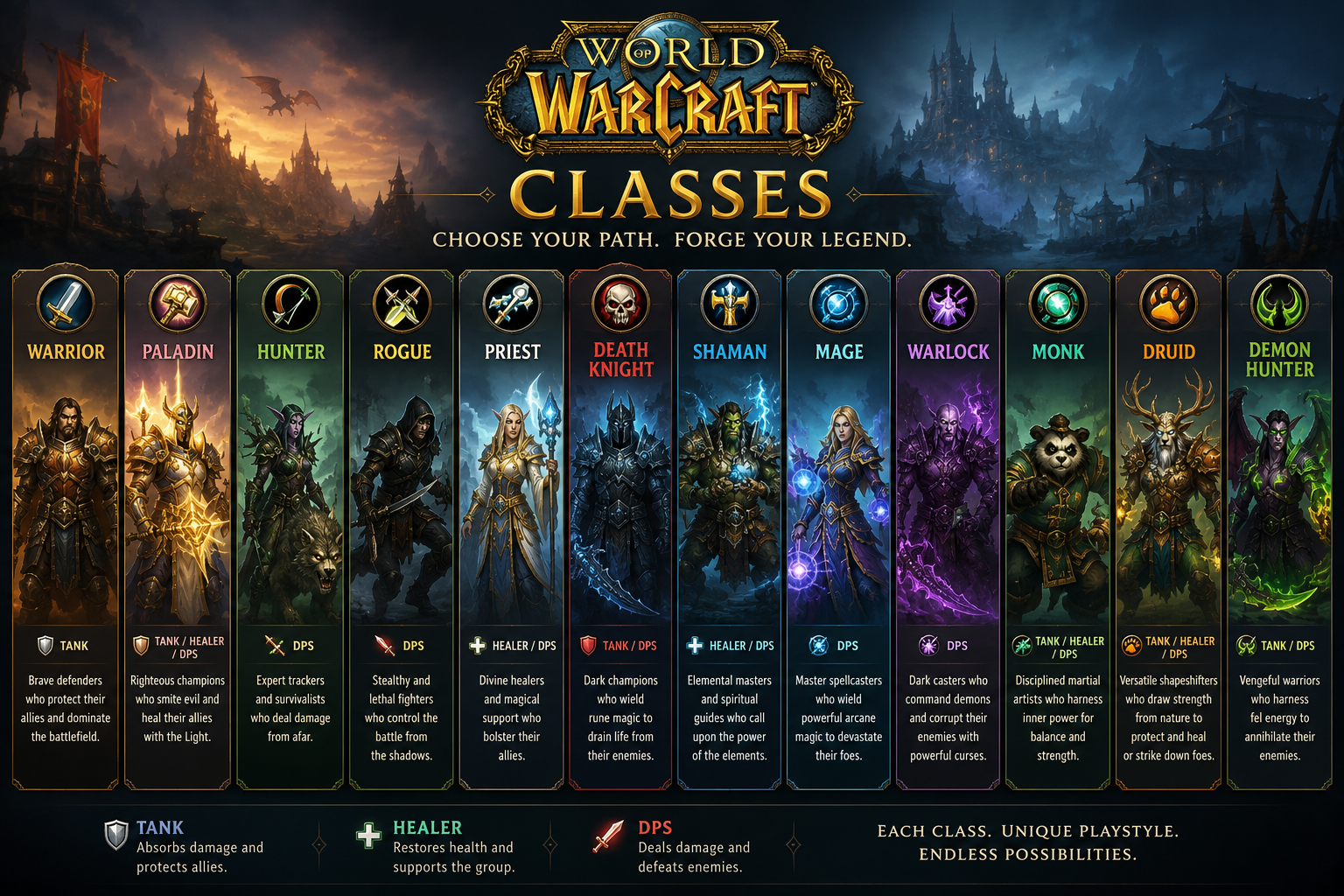
There are currently thirteen distinct playable options available to players. These include the original classes from the game’s launch as well as those added across expansions: Death Knight, Demon Hunter, Druid, Evoker, Hunter, Mage, Monk, Paladin, Priest, Rogue, Shaman, Warlock, and Warrior. Each one features two to four specializations that further refine playstyle, role, and abilities. Specializations determine whether a character primarily tanks damage, heals allies, or deals damage, and many classes can switch between roles by simply changing specialization.
Armor types also vary: plate for the heaviest options, mail for medium, leather for agile fighters, and cloth for casters. Resource systems differ as well—rage, energy, mana, runes, focus, chi, essence, and more—creating unique pacing and decision-making for each. In the current expansion cycle, hero talents and ongoing balance updates continue to reshape how these options perform in endgame content, but the core identities remain strong.
Choosing among the available wow classes involves considering personal preference for fantasy (holy warrior, shadowy assassin, nature-wielding shapeshifter, etc.), preferred combat range (melee or ranged), desired role flexibility, and complexity level. Some options excel at one role while others offer hybrid versatility. The following sections break down each category in detail.
Tank Specializations Across Classes
Tanking requires high survivability, threat generation, and the ability to control enemy attention while protecting the group. Several classes provide dedicated tank specializations.
Death Knights in the Blood specialization use runes and runic power to deliver powerful self-healing through Death Strike while applying diseases and area damage. Their plate armor and strong cooldowns make them durable against both physical and magical threats. Demon Hunters in Vengeance rely on high mobility, Fel energy, and Metamorphosis forms for aggressive tanking with strong area-of-effect capabilities. Warriors in Protection generate rage and use shields for classic defensive play, featuring powerful interrupts and group utility. Paladins in Protection blend holy power with plate armor for reliable mitigation and strong cooldowns. Monks in Brewmaster emphasize staggered damage intake and high mobility, turning incoming damage into manageable DoTs. Druids in Guardian form shift into bear shape for high health pools and nature-based defenses.
Each tank specialization brings unique tools: some excel at single-target threat, others at multi-target control, and several offer strong self-sustain that reduces healer pressure. In modern content, tanks must also manage defensive cooldowns carefully and contribute to group utility through interrupts, crowd control, and external defensive abilities.
Healer Specializations and Support Roles
Healing focuses on keeping the group alive through direct heals, periodic regeneration, absorption shields, and preventive tools. Multiple classes offer strong healing specializations.
Priests provide both Holy (strong single-target and area healing with light-based fantasy) and Discipline (damage absorption and atonement healing that rewards dealing damage). Paladins in Holy use holy power for burst healing and strong cooldowns. Shamans in Restoration rely on totems, earth and water themes, and strong group utility. Monks in Mistweaver deliver chi-based healing with high mobility and unique channeling tools. Druids in Restoration emphasize HoTs (heals over time) and nature synergy, excelling at sustained healing. Evokers in Preservation use essence and empowered spells for mid-range healing with strong mobility and unique support options. Augmentation Evokers further expand support by providing buffs that enhance allies’ performance rather than pure healing.
Healers must master positioning, cooldown management, and triage under pressure. Many also bring valuable utility such as battle resurrections, external defensive cooldowns, or group buffs. The choice often comes down to preferred healing style—proactive HoTs, reactive big heals, or hybrid damage-and-heal approaches.
Damage-Dealing Options: Melee and Ranged
The majority of specializations focus on dealing damage. These divide broadly into melee and ranged categories, with further splits between physical and magical damage.
Melee damage dealers include Arms and Fury Warriors (rage-based weapon mastery and dual-wield fury), Retribution Paladins (holy power burst), Frost and Unholy Death Knights (runic melee with diseases or frost magic), Havoc Demon Hunters (high-mobility fel damage), Windwalker Monks (chi and combo-based martial arts), Feral Druids (energy and combo points in cat form), Enhancement Shamans (elemental dual-wield melee), Survival Hunters (melee with traps and pets), and the three Rogue specializations (Assassination for poisons and bleeds, Outlaw for pirate-themed combat, Subtlety for stealth and shadow strikes).
Ranged physical options center on Hunters: Beast Mastery (pet-focused), Marksmanship (precise shot focus), with Survival offering a hybrid melee alternative. Magical ranged damage comes from Mages (Arcane resource management, Fire combustion bursts, Frost control and shards), Warlocks (Affliction DoTs, Demonology pet armies, Destruction chaos bursts), Elemental Shamans (lightning and lava), Balance Druids (astral power and eclipses), Shadow Priests (insanity and void forms), Devastation Evokers (empowered dragon spells), and the newer Devourer option for Demon Hunters in recent updates.
Each damage specialization features distinct rotation complexity, burst windows, sustained output, and utility. Some excel in single-target boss fights, others in multi-target dungeon cleave, and many provide strong crowd control or mobility that benefits the whole group.
Hybrid Classes and Role Flexibility
A few classes stand out for their ability to fill multiple roles effectively. Druids remain the ultimate hybrid, capable of tanking, healing, melee damage, and ranged damage within a single character by switching forms and specializations. This versatility makes them excellent for players who enjoy variety or need to adapt to group needs. Monks, Paladins, and Shamans also offer solid flexibility across tank, heal, and damage roles. Death Knights and Demon Hunters provide tank and damage options. Evokers add unique support through Augmentation while covering healing and damage.
Hybrid play rewards players who invest time learning multiple specializations. Gear can often be shared or adapted across roles with the modern warband and equipment systems, reducing the traditional barrier of maintaining multiple sets.
Resource Systems and Playstyle Differences
Understanding resources is key to mastering any option. Warriors and some others use rage generated by dealing or taking damage. Rogues and Feral Druids rely on energy that regenerates steadily, paired with combo points. Casters typically use mana, with some employing secondary resources such as holy power, chi, runic power, essence, or focus. Death Knights manage runes on a cooldown system. These systems create different combat rhythms—some favor steady button pressing, others emphasize careful resource pooling for big moments.
Complexity varies widely. Some specializations offer relatively straightforward rotations suitable for newer players, while others involve intricate priority systems, proc management, and precise timing that reward experience and practice.
How to Choose the Right Option for You
Selecting among the available wow classes begins with self-assessment. Consider preferred fantasy and aesthetics: do you want to wield holy light, command demons, shapeshift into animals, or dual-wield fel blades? Think about combat preference—close-quarters melee intensity versus safe ranged casting. Decide whether you want role flexibility or a dedicated focus on one role. Factor in group content goals: tanks and healers often find groups more quickly, while pure damage dealers may face more competition for spots.
Try multiple options during leveling or on secondary characters. The current systems make creating and leveling alts more accessible than in earlier eras. Pay attention to current balance trends, but prioritize enjoyment—meta shifts frequently, and a class you love will keep you engaged longer than one chosen purely for rankings. Community resources, in-game practice, and trial-and-error remain the best teachers.
Specializations, Hero Talents, and Ongoing Evolution
Every class features multiple specializations that fundamentally change abilities, talent trees, and playstyle. Switching specializations is free and instant outside of combat in most cases, allowing rapid adaptation. Hero talent systems introduced in recent expansions add further layers of customization, letting players specialize within a specialization for different content types or personal preferences.
Balance updates, new talent options, and expansion themes continually refine performance. What feels strong in one patch may shift in the next, encouraging experimentation. The core fantasy and mechanical identity of each class, however, remains consistent across years of development.
FAQs
How many playable options exist currently?
There are thirteen distinct classes available.
Can every race play every class?
Restrictions have loosened significantly over time. Most races can access the majority of classes, though a few limitations remain for thematic or mechanical reasons (such as certain shapeshifting requirements or exclusive starting options).
Which options are best for beginners?
Many players recommend Hunters for their pets and straightforward ranged play, or Warriors and Paladins for durable melee experiences. Ultimately, the best starting choice is the one whose fantasy appeals most.
Do I need multiple characters to experience different roles?
Not necessarily. Hybrid classes allow role switching on a single character, and modern systems make alts easier to maintain than in the past.
How important is the current meta when choosing?
Enjoyment should come first. Strong performance in one season can change with the next balance pass. Playing what feels fun leads to better long-term engagement.
Are there tank, healer, and damage options for every preference?
Yes. Multiple choices exist in each role category, covering different armor types, resource systems, and fantasy themes.
What is the difference between a class and a specialization?
A class is the broad identity (for example, Mage). A specialization further defines the role and detailed abilities within that class (Arcane, Fire, or Frost).
Conclusion
The selection of wow classes forms the foundation of every World of Warcraft journey. From the undead might of Death Knights to the draconic power of Evokers, each option delivers a unique combination of lore, mechanics, and group utility. Whether the goal is mastering a single specialization for competitive content, enjoying flexible hybrid play, or simply immersing in a preferred fantasy, the roster offers something for nearly every preference. Taking time to explore the available choices, experiment with specializations, and understand resource systems leads to a richer and more rewarding experience. As the game continues to evolve with new content and refinements, the core appeal of these diverse playstyles endures, inviting both new and returning players to find their place on the battlefields of Azeroth.