The Complete Guide to Geometry Dash World: Everything Players Need to Know in 2026
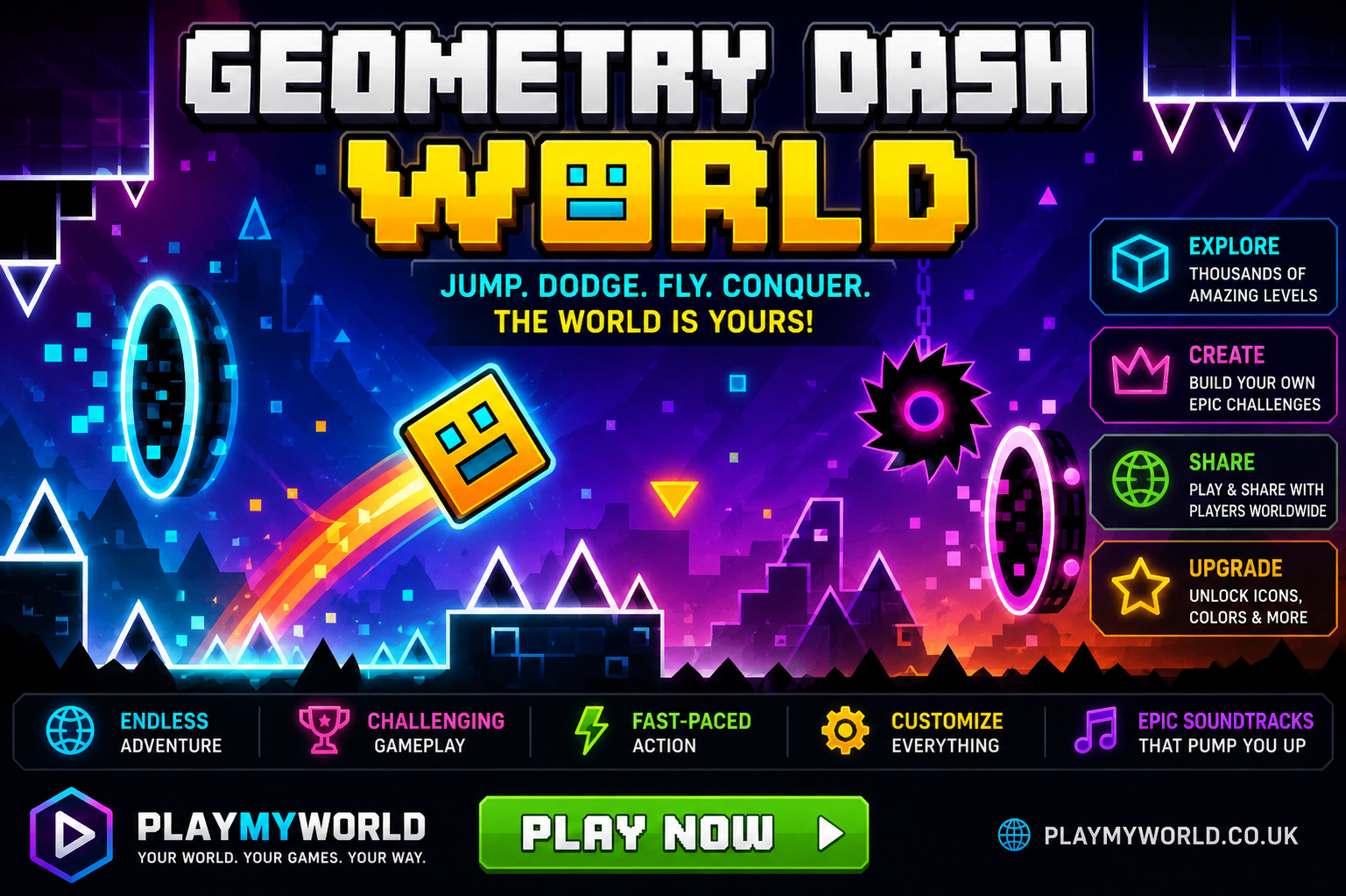
Geometry Dash World has built a massive following through its unique blend of rhythm-based platforming, precise timing, and challenging obstacle courses. Among its free spin-offs, one title stands out for introducing exclusive short levels and a structured progression system that many players still enjoy years after launch. This free-to-play entry offers a self-contained adventure with two themed worlds, original music tracks, collectible rewards, and access to selected online content once the main stages are cleared. Whether you are new to the series or returning after time away, this guide covers gameplay mechanics, level details, progression systems, customization options, tips for success, and how this version fits into the broader franchise.
What Is Geometry Dash World?
Released in December 2016 by RobTop Games for iOS and Android, this free ad-supported spin-off serves as both a standalone experience and a preview of features that later appeared in the full Geometry Dash World update cycle. It contains ten exclusive short levels that must be completed in sequence. These stages are divided evenly between two distinct environments: Dashlands and Toxic Factory. Each level lasts roughly thirty to forty seconds and features original electronic soundtracks carefully synchronized with every jump, gravity flip, and portal transition.
Unlike the full paid version, this title does not include a level editor or unlimited user-generated content from the start. Instead, it focuses on a curated set of official stages while unlocking limited online features—such as the daily level, weekly demon, and selected featured community maps—after the player finishes all ten main levels. Account progress, including certain icons, colors, and collectibles, can transfer to the full Geometry Dash once a user account is linked, making it a useful entry point for players who later decide to purchase the complete game.
The core loop remains true to the series: an auto-scrolling geometric icon races through a course of spikes, blocks, moving platforms, and hazards. A single collision in Normal mode restarts the level from the beginning. Practice mode allows checkpoint placement so players can learn difficult sections without constant full restarts. Simple one-button controls—tap, click, or press space—drive every action, with additional inputs for holding during ship sequences or rapid taps for multiple jumps.
Core Gameplay Mechanics
Success depends on rhythm and muscle memory. Obstacles are placed to match the beat of the soundtrack, so listening carefully often proves more helpful than pure visual reaction. The icon begins as a cube that jumps when the player inputs a command. Portals change the form and physics mid-level: ship mode requires holding to ascend and releasing to descend; ball mode inverts gravity with each bounce; UFO, wave, robot, and spider forms appear in later stages and demand different timing patterns.
Speed portals accelerate or slow the pace, while gravity portals flip the orientation of the entire playfield. Size portals shrink or enlarge the icon, altering hitboxes and jump heights. These transformations keep every stage feeling fresh even within the short runtime. Secret coins hidden in each level reward careful exploration and precise pathing. Collecting them contributes to overall stars, mana orbs, and other currencies used in shops.
Two primary modes support different goals. Normal mode demands a perfect run from start to finish and awards full completion rewards. Practice mode lets players drop checkpoints at will, practice individual segments, and gradually piece together a complete clear. Many players alternate between the two: learning the layout in practice, then attempting clean runs in normal mode for stars and achievements.
Daily quests and timed chests add ongoing objectives beyond the main levels. Completing these yields diamonds, keys, and other resources needed for the shops and secret vaults. The Treasure Room and various vaults hide additional icons, colors, and death effects behind password codes or key requirements, encouraging players to explore every menu and corner of the interface.
The Two Worlds and Their Levels
Progression is strictly sequential. The second world remains locked until every stage in the first is cleared. This structure creates a clear sense of advancement and prevents players from jumping ahead to more difficult content before mastering the basics.
Dashlands
Dashlands serves as the introductory world with five relatively approachable levels set against colorful, energetic backdrops. Music in this section primarily comes from Dex Arson and features upbeat electronic tracks that establish the rhythm-based foundation.
Payload opens the experience with straightforward jumps and simple obstacle patterns, awarding two stars on completion. Beast Mode follows with slightly denser sequences and introduces more varied timing windows while remaining accessible. Machina raises the difficulty with tighter corridors and earlier portal transitions. Years emphasizes melodic sections that reward players who internalize the beat. Frontlines closes the world with faster pacing and combinations of ship and cube sequences that prepare players for the challenges ahead.
Each stage in Dashlands teaches core skills without overwhelming new players. Secret coins appear in moderately difficult locations, encouraging multiple attempts and route optimization.
Toxic Factory
Once Dashlands is fully cleared, Toxic Factory unlocks. This second world adopts a darker, industrial aesthetic with more aggressive obstacle placement and higher overall difficulty. Tracks here feature contributions from Waterflame and F-777 alongside additional Dex Arson pieces, delivering faster tempos and more complex rhythmic patterns.
Space Pirates opens the factory with ship-heavy sequences and moving hazards. Striker demands precise timing across rapid form changes. Embers introduces more gravity flips and narrow passages. Round 1 intensifies the challenge with layered obstacles that punish even small mistakes. Monster Dance Off serves as the finale, combining multiple form shifts, speed changes, and dense spike arrangements into a climactic test of everything learned so far.
Although still shorter than most full-game levels, the Toxic Factory stages require stronger pattern recognition and cleaner inputs. Completing the entire set unlocks broader online features and additional rewards.
Progression Systems, Collectibles, and Customization
Beyond simply finishing levels, the game layers several reward systems that encourage continued play. Stars earned from level completions contribute to overall progress and unlock new icons. Mana orbs serve as a secondary currency for certain shop purchases. Diamonds function as a premium resource obtained through quests, chests, and high-performance clears. Keys open special rooms and chests.
Shops offer unique icons, color schemes, and trail effects. Secret shops and the community shop expand the selection further. The Vault of Secrets and related chambers hide additional cosmetics behind codes and key requirements, adding a light puzzle element for dedicated players.
Achievements track milestones such as completing specific levels, collecting all coins in a stage, or finishing daily challenges. Unlocking these grants further customization options. Death effects—visual flourishes that appear when the icon collides with an obstacle—can also be unlocked and equipped, giving even failed runs a bit of personality.
After finishing all ten official levels, the game grants access to a curated selection of online content. Players can attempt the daily level for diamond rewards, tackle the weekly demon for greater challenges, and browse a limited pool of featured community maps. This bridge to the wider player-created ecosystem keeps the experience feeling fresh long after the main campaign ends.
Tips for Mastering the Game
New players should begin in Practice mode on every level. Place checkpoints after each successful section and gradually remove them as confidence grows. Listening to the music on repeat outside the game helps internalize timing windows before attempting clean runs.
Focus first on pure survival rather than coin collection. Once a level can be completed consistently, return for the secret coins. Many coins sit on alternate paths that require precise jumps or form-specific techniques, so mastering the main route first reduces frustration.
Watch the icon’s trail and shadow for visual feedback on jump height and landing spots. In ship sections, small, frequent inputs usually produce better control than long holds. During wave segments, smooth continuous movement often outperforms rapid tapping. Gravity flips demand quick mental reorientation; practicing these transitions in isolation pays dividends later.
Daily quests and chests provide steady resources even on days when full level clears feel out of reach. Checking the Treasure Room regularly ensures no limited-time rewards are missed. Linking a user account early allows progress to transfer if the player later moves to the full version of the series.
Patience remains the most important skill. Short levels can still require dozens of attempts. Each failure reveals more of the pattern, and consistent practice eventually produces clean runs.
How This Version Compares to the Full Game and Other Spin-Offs
The full Geometry Dash offers a larger set of official levels, a powerful level editor, unrestricted online browsing, map packs, gauntlets, and far more extensive customization and leaderboard systems. It also removes advertisements. In contrast, the free spin-off prioritizes accessibility and a focused campaign of exclusive short stages.
Compared with Geometry Dash Lite, Meltdown, and SubZero, this title includes a more developed progression system with diamonds, quests, and post-campaign online access. Meltdown and SubZero each focus on three longer levels with distinct musical themes, while Lite offers a sampling of the original game’s content. The world-based structure and sequential unlocking set this spin-off apart as a more guided experience.
Players who enjoy the rhythm-platforming core and want additional content without immediate purchase often find this version an ideal starting point. Those seeking deeper creative tools or the full online community eventually migrate to the paid release, carrying over many of their unlocks.
Common Challenges and How to Overcome Them
The most frequent difficulty is the unforgiving restart system in Normal mode. A single mistake near the end of a stage forces a complete replay. Switching to Practice mode for learning, then returning to Normal for scoring, solves this efficiently.
Some players struggle with form transitions. Spending time in Practice mode solely on portal sequences builds the necessary muscle memory. Music volume should remain high enough to hear the beat clearly, as visual cues alone are often insufficient at higher speeds.
Advertisements appear between sessions in the free version. Completing levels and quests in focused batches minimizes interruptions. Device performance can also affect input lag; closing background apps and ensuring a stable connection helps maintain consistent timing.
Secret coins sometimes require routes that feel counterintuitive. Watching the level flow carefully and experimenting with alternate paths during Practice mode reveals most of these locations without external assistance.
Frequently Asked Questions
Is geometry dash world completely free?
Yes. It is free to download and play, supported by advertisements. No purchases are required to complete the main levels or access core features.
How many levels does it contain?
There are exactly ten exclusive official levels divided into two worlds of five stages each.
Can progress transfer to the full Geometry Dash?
Yes. Linking a user account allows certain unlocks, icons, and data to carry over to the paid version.
Does it include a level editor?
No. The editor is exclusive to the full game. This version focuses on official content and limited online levels after the campaign.
What happens after finishing all ten levels?
Players gain access to the daily level, weekly demon, and a selection of featured community levels, along with additional rewards and shop options.
Are the levels the same difficulty as the main game?
They are generally shorter and range from easy to moderate difficulty, making them more approachable for newcomers while still offering challenge in the later stages.
Can I play online multiplayer?
The game is single-player focused. Online features center on downloading and playing selected user-created levels rather than real-time multiplayer.
Is practice mode available?
Yes. Practice mode allows checkpoint placement and is essential for learning difficult sections.
Conclusion
This free spin-off delivers a polished, focused experience that captures the essence of the Geometry Dash formula while remaining accessible to new and returning players alike. With ten carefully designed short levels across two themed worlds, exclusive music tracks, a rewarding progression system of stars, diamonds, and collectibles, and a bridge into limited online content, it stands as a worthwhile entry in the series. The combination of rhythm-synchronized challenges, simple yet deep controls, and steady unlocks keeps sessions engaging without demanding the larger time investment of the full game.
Whether used as an introduction to the franchise, a portable way to practice timing skills, or a complete short campaign in its own right, the title continues to offer satisfying gameplay years after its release. Mastering its levels builds the same fundamental skills required throughout the series, and the transferable progress provides a smooth path for those ready to explore the wider world of user-created content and advanced features. For anyone seeking rhythmic platforming challenges in a free, self-contained package, geometry dash world remains a strong recommendation in 2026.