The Ultimate Guide to Gravity Run: Gameplay, Tips, History and Why Players Love It
In the fast-paced world of mobile and browser gaming, few genres deliver pure adrenaline quite like the endless runner. Among the many variations, gravity run stands out by introducing a simple yet brilliantly addictive mechanic: the ability to flip the direction of gravity at will. Instead of merely jumping over obstacles, players switch between running on the floor and the ceiling, creating a constant test of timing, spatial awareness, and reflexes. This article offers a complete exploration of the gravity run concept, covering its core mechanics, popular implementations, strategies for high scores, educational applications, and lasting appeal. Whether you are a casual player looking for quick fun or a dedicated gamer chasing leaderboards, the following pages provide everything you need to understand and master this exciting style of play.
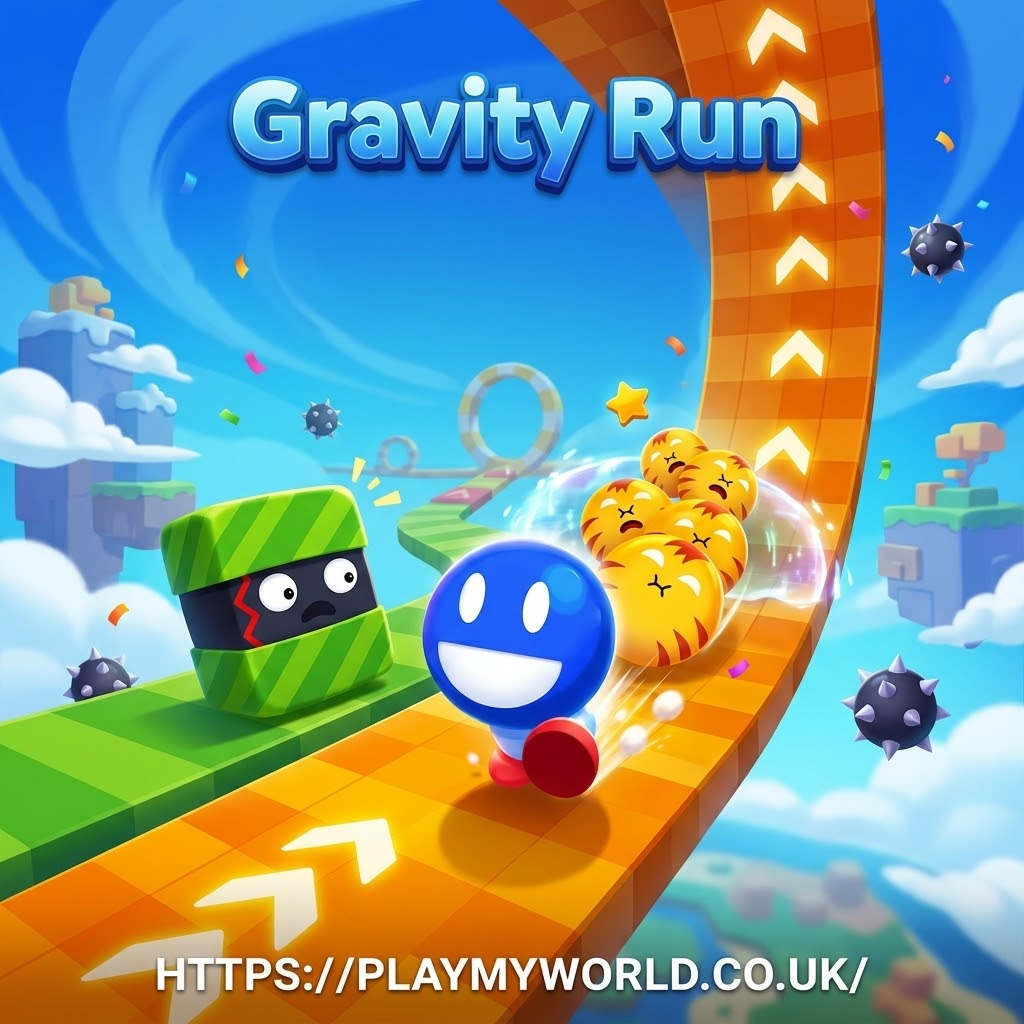
The term gravity run most commonly refers to a subgenre of platformer and endless runner games in which the protagonist moves forward automatically while the player controls gravity orientation. A single tap or click reverses the pull of gravity, sending the character from the ground to the ceiling or vice versa. Obstacles appear above and below, forcing split-second decisions that keep sessions intense and replayable.
Understanding the Core Mechanics of Gravity Run
At its heart, a gravity run experience relies on continuous forward motion combined with player-controlled gravity flips. The character never stops running. The only meaningful input is the gravity switch, which instantly changes the direction in which the character “falls.” This creates a dual-surface environment where both the floor and ceiling become playable surfaces.
How Gravity Switching Works
When gravity is normal, the character runs along the bottom of the tunnel or track. Activating the switch causes the character to fall upward and begin running on the ceiling. A second switch returns the character to the floor. Timing is everything. Flip too early and the character collides with an obstacle; flip too late and the same result occurs. Successful play requires reading the pattern of upcoming hazards and executing the switch at the precise moment that keeps the character safe.
Common Obstacles and Challenges
Typical hazards include spikes, lasers, moving platforms, narrowing gaps, and sudden dead ends on one surface. Many games introduce speed increases as the run progresses, raising the difficulty and demanding faster reactions. Power-ups such as temporary shields, slow-motion effects, or score multipliers appear in more polished titles, adding strategic depth beyond pure reaction time.
Scoring and Progression Systems
Most gravity run titles reward distance traveled, stars or coins collected, and consecutive successful flips. High-score chasing becomes the primary long-term goal. Some versions feature discrete levels with star ratings, while others adopt a pure endless format that continues until the player collides with an obstacle.
The Rise and Popularity of Gravity Run Games
The gravity-flipping mechanic emerged as developers sought fresh ways to evolve the endless runner formula that had dominated mobile gaming since the early 2010s. Traditional runners relied on jumping, sliding, and lane switching. Adding gravity control introduced a new dimension of spatial thinking without complicating the one-touch control scheme that makes these games accessible on smartphones.
Browser-based versions and free-to-play mobile apps spread the concept rapidly. Players appreciated the low barrier to entry—anyone can understand the single-tap control within seconds—combined with a high skill ceiling that rewards practice and pattern recognition. The hypnotic visual style often employed, featuring neon tunnels, glowing obstacles, and synthwave soundtracks, further enhanced the appeal and helped the genre stand out in crowded app stores.
Popular Variations and Notable Titles
While many games share the same fundamental idea, implementations differ in presentation, difficulty curve, and extra features.
Some focus on pure tunnel navigation with increasing speed. Others expand into multi-level campaigns with unique themes for each stage. A few incorporate hoverboards, spaceships, or abstract geometric characters instead of traditional humanoid runners. Difficulty modes ranging from practice to hardcore allow players of different skill levels to find an appropriate challenge. Level editors in certain titles let creative players design and share their own gravity-defying courses.
Educational versions of the concept also exist. Classroom “gravity run” activities use cardboard tubes, ramps, and marbles to teach children about momentum, acceleration, and energy transfer in a hands-on way. These physical constructions mirror the digital mechanic while reinforcing real-world physics principles.
Strategies for Mastering Gravity Run
Success in any gravity run title depends on more than quick reflexes. Experienced players develop several complementary skills.
Pattern Recognition
Obstacles rarely appear randomly. Most games use repeating or semi-predictable sequences. Learning to identify upcoming patterns allows players to prepare gravity switches in advance rather than reacting at the last possible moment.
Rhythm and Timing
Many runs develop a natural rhythm. Matching the timing of flips to the game’s pace reduces mental load and improves consistency. Listening to the soundtrack can help maintain this rhythm, especially in titles with strong audio design.
Risk Management
Collecting every star or coin is rarely optimal. High-level play often involves deliberately skipping risky collectibles when the safer path preserves the run. Understanding when to prioritize survival over score multipliers separates average players from leaderboard contenders.
Practice Techniques
Starting on easier difficulty settings or practice modes builds muscle memory for the gravity switch. Focusing on short, deliberate sessions rather than marathon attempts reduces frustration and improves retention of new patterns.
The Educational Value of Gravity Run Concepts
Beyond entertainment, the gravity run idea serves as an excellent teaching tool. In elementary classrooms, students build physical marble runs and experiment with ramp angles, tube lengths, and obstacle placement. These activities introduce core physics concepts such as gravitational potential energy converting into kinetic energy, the effect of slope on acceleration, and the importance of friction.
Digital versions reinforce the same ideas in an interactive format. Players intuitively learn that changing gravity direction alters the path an object follows, providing a visceral demonstration of forces that textbooks can only describe abstractly. Teachers report high engagement when lessons incorporate these playful experiments.
Gravity Run in the Broader Context of Gaming Trends
The success of gravity run games reflects larger trends in mobile and casual gaming. Players increasingly favor experiences that offer instant accessibility, short session lengths, and clear skill progression. One-touch controls remain ideal for smartphones, while the novelty of gravity manipulation keeps the formula from feeling stale.
Visual and audio presentation also matters. Many titles lean into retro-futuristic or synthwave aesthetics that create a distinctive atmosphere. Smooth animation and responsive controls further elevate the experience, turning a simple concept into something that feels polished and satisfying.
Community and Competitive Aspects
Although primarily single-player experiences, many gravity run games include global leaderboards and achievement systems. Comparing scores with friends or anonymous rivals adds a competitive layer that encourages repeated play. Some communities share custom levels, speedrun strategies, or high-score videos, fostering a modest but dedicated following around the genre.
Potential Future Developments
As technology advances, gravity run mechanics may expand into new formats. Augmented reality versions could overlay virtual tunnels onto real-world environments. Virtual reality adaptations might allow players to physically lean or gesture to influence gravity. Cross-platform progression and deeper customization options could further increase longevity. Regardless of the specific innovations, the core appeal of mastering an inverted world through precise timing is likely to remain strong.
Practical Tips for New Players
Begin with the easiest available mode and focus solely on surviving rather than collecting every item. Pay close attention to the moments just before and after each gravity switch, as these transitions are where most mistakes occur. Gradually increase the challenge only after achieving consistent runs on the current difficulty. Experiment with different devices if possible—some players find touchscreens more intuitive, while others prefer mouse clicks on a computer.
Keep sessions short at first. Fatigue quickly degrades reaction time in high-speed gravity run gameplay. Returning with a fresh mind often produces better results than forcing longer attempts.
FAQs
What is a gravity run game?
A gravity run is a type of endless runner or platformer in which the player flips the direction of gravity to move the character between the floor and ceiling while avoiding obstacles.
How do you control the character?
In most versions the character runs forward automatically. The player only needs to tap or click to reverse gravity.
Are these games free to play?
Many browser and mobile versions are free with optional advertisements or in-app purchases. Some premium titles charge a small one-time fee.
Is gravity run suitable for children?
Yes. The simple controls and colorful presentation make most titles appropriate for younger players, and educational marble-run variants are specifically designed for classroom use.
What skills does playing improve?
Regular play sharpens reaction time, pattern recognition, spatial awareness, and the ability to make rapid decisions under pressure.
Can I play offline?
Many mobile versions support offline play once downloaded. Browser versions typically require an internet connection.
Why do the games get harder so quickly?
Increasing speed and denser obstacle placement create a natural difficulty curve that keeps skilled players engaged while still allowing newcomers to enjoy early stages.
Conclusion
Gravity run has carved out a distinctive niche within the endless runner landscape by transforming a single, elegant mechanic into hours of challenging and rewarding gameplay. The simple act of flipping gravity opens up a dual-surface world that demands constant attention and precise timing. From casual browser sessions to competitive high-score chasing and even classroom physics lessons, the concept proves remarkably versatile. Players who invest time in mastering pattern recognition, rhythm, and risk management discover a deeply satisfying skill-based experience that remains fresh long after the initial novelty fades. As long as developers continue refining the formula with creative level design, compelling audiovisuals, and thoughtful progression systems, gravity run will remain a favorite destination for anyone seeking fast, focused, and endlessly replayable fun. Whether you are flipping gravity for the first time or chasing a new personal best, the inverted tunnels and glowing obstacles await.