Blooket Hacks: Understanding the Search, Risks, and Better Paths Forward
Blooket has become one of the most popular classroom game platforms in recent years. Teachers use it to turn quizzes, vocabulary practice, and review sessions into competitive, engaging experiences that students actually enjoy. With modes that feel like games rather than tests, it is easy to see why the platform spread so quickly through schools. At the same time, a growing number of students type the phrase blooket hacks into search engines every day. They hope to find shortcuts that let them win more often, earn higher scores, or unlock content faster. This article examines that search term carefully, explains what people usually mean by it, outlines the real risks involved, and points toward healthier ways to succeed on the platform.
The goal here is not to supply working scripts or step-by-step instructions for cheating. Instead, the focus is on clear information so that students, parents, and teachers can make informed decisions. Understanding why the phrase blooket hacks appears so frequently helps everyone respond more effectively.
What Blooket Actually Is
Blooket is an online learning platform that combines quiz-style questions with game mechanics. Teachers create or import question sets and then choose a game mode. Popular modes include Tower Defense, Crazy Kingdom, Gold Quest, and Battle Royale. Students answer questions correctly to earn in-game currency, power-ups, or advantages that help them progress. The platform rewards accuracy and speed, but it also rewards strategy depending on the chosen mode.
Because the experience feels playful, many students become highly motivated to climb leaderboards or finish first. That motivation is positive when it encourages real learning. Problems arise when the desire to win overrides the desire to learn, and students start looking for ways to bypass the normal rules.
Why Students Search for Shortcuts
Several factors drive searches related to game advantages. First, classroom competition can feel intense. When scores are displayed publicly or when teams compete, some students feel pressure to keep up or to stand out. Second, certain game modes reward rapid correct answers with powerful upgrades. Students who answer more slowly may feel permanently behind even if they understand the material. Third, curiosity plays a role. Online communities share stories of “working methods,” and the idea of an easy win is attractive.
In many cases the search begins with innocent curiosity and escalates when someone claims a method works. The phrase blooket hacks becomes a convenient umbrella term that covers everything from browser extensions to shared scripts to simple advice about guessing strategies. Not every result is technical; some are simply lists of common question answers or tips for choosing better power-ups. Still, a large portion of the content that surfaces under that search is aimed at circumventing the platform’s normal operation.
Common Types of Claims People Encounter
When students look for ways to gain an edge, they typically encounter several categories of content:
- Browser-based tools that claim to automate answers or reveal correct choices.
- Shared code snippets that alter local game state.
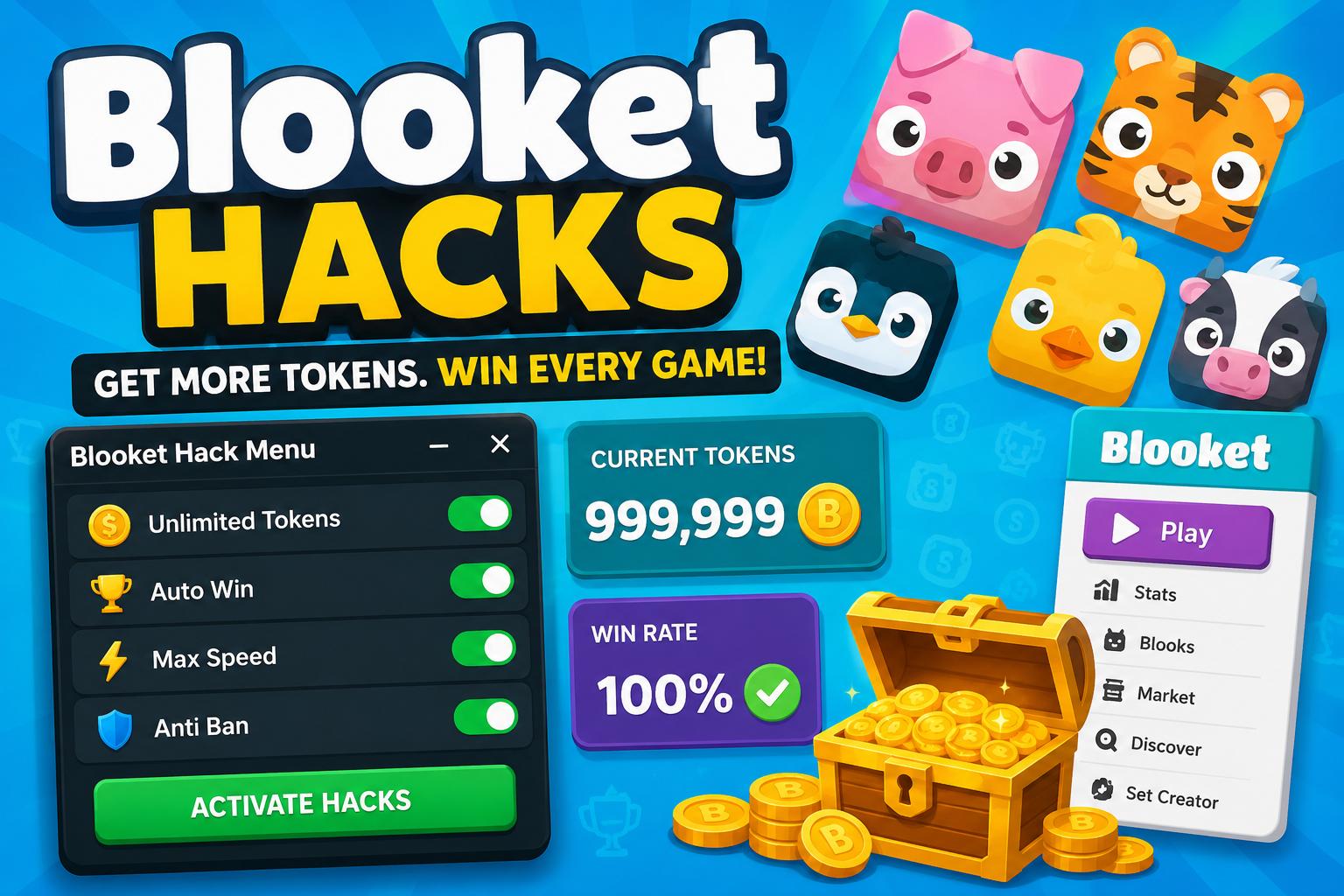
- Guides that promise unlimited currency or unlocked characters.
- Tips that focus on legitimate strategy rather than rule-breaking.
The first three categories almost always violate Blooket’s terms of service. They can also expose devices to security risks. The fourth category—pure strategy advice—is usually harmless and can even improve learning when it encourages careful reading of questions.
It is important to separate the two. Searching for better ways to play within the rules is different from seeking tools that change the game itself. The keyword blooket hacks is most often associated with the second group, which is why caution is necessary.
Risks Associated with Unofficial Tools
Using unofficial scripts or extensions carries several concrete risks.
Account and school consequences. Most school networks and learning platforms monitor unusual activity. When a student suddenly answers every question correctly in a fraction of a second or accumulates resources far beyond normal rates, the pattern is noticeable. Teachers can see detailed reports. Schools may treat the behavior as academic dishonesty, leading to loss of credit, disciplinary notes, or restricted platform access.
Security exposure. Many free “tools” circulating online request permissions to read and change data on websites. Some are poorly written; others are deliberately malicious. Installing them can give outsiders access to browser cookies, login sessions, or personal information. In a school environment this risk is amplified because shared devices and student accounts are involved.
Learning opportunity cost. Every minute spent searching for shortcuts is a minute not spent reviewing the actual material. Over time, reliance on external help weakens the very skills the game is designed to strengthen. Students who regularly use unfair advantages often perform worse on traditional assessments that cannot be gamed the same way.
Legal and ethical considerations. While most student-level activity stays within the realm of terms-of-service violations rather than criminal law, the underlying principle remains the same: the platform sets rules, and users agree to follow them. Ignoring those rules undermines fairness for classmates who play honestly.
How Blooket Detects and Responds
Platforms that host competitive educational games continuously improve detection methods. Unusual answer timing, impossible resource totals, and patterns that match known scripts are flagged. Teachers also receive tools that let them review individual student performance in detail. When anomalies appear, the simplest response is often to reset progress, remove the student from the live game, or switch to a different mode that is harder to manipulate.
Because detection improves over time, methods that appear to work one week frequently stop working the next. Students who invest energy in finding and maintaining unofficial tools often find themselves starting over repeatedly.
Legitimate Ways to Improve Performance
Students who want better results have several constructive options that stay within the rules.
Master the content first. The single most reliable advantage is knowing the answers. Reviewing flashcards, notes, or the question set before the game begins produces higher accuracy and faster response times without any external help.
Learn the specific game mode. Each mode has its own economy and decision points. Understanding when to spend currency, which power-ups are most efficient, and how to manage risk improves outcomes far more than random clicking.
Practice under similar conditions. Some teachers allow practice sets. Using those sets to build speed and confidence translates directly into better live performance.
Focus on consistency rather than one perfect game. Leaderboards reward steady high accuracy across many questions more than occasional lucky streaks.
Talk with the teacher. If a particular mode feels unbalanced or if the competition is creating excessive stress, open conversation often leads to adjustments—different modes, team play, or quieter scoring options.
These approaches produce lasting improvement and avoid the cycle of temporary advantage followed by detection or account problems.
The Role of Parents and Educators
Adults can reduce the appeal of shortcuts by shaping the environment around the game. When grades or public rankings are tied tightly to Blooket performance, pressure rises. Using the platform primarily for low-stakes practice or formative review lowers that pressure. Celebrating effort, improvement, and sportsmanship rather than only final scores also helps.
Clear classroom norms about fair play, stated before games begin, set expectations. When students know that unusual results will be questioned, the incentive to seek external tools decreases. At the same time, adults can model curiosity about the material itself rather than only the score.
Broader Context of Educational Gaming
Blooket is part of a larger trend of game-based learning tools. Similar platforms face the same tension between engagement and integrity. The more a system rewards speed and ranking, the more some users will look for ways to accelerate results. Designers respond with better anti-cheat measures, while educators respond with thoughtful implementation. The healthiest long-term outcome is a culture in which the learning itself is the main reward and the game is simply an enjoyable vehicle.
Students who internalize that perspective tend to perform well across many platforms and assessment formats. Those who treat every game as a system to be broken often struggle when the next system cannot be broken the same way.
FAQs
Is searching for advantages against Blooket rules?
Looking for information is not itself a violation. Using tools or methods that alter game behavior or give unfair access to answers usually is. The platform’s terms of service prohibit unauthorized interference with the service.
Can teachers see if someone is using extra tools?
Teachers receive detailed reports on answer accuracy, timing, and resource totals. Sudden impossible performance is often visible. Network monitoring at the school level can also flag unusual traffic.
Do any “free tools” actually work for long?
Methods that appear effective are typically short-lived. Platforms update detection, and many circulating scripts stop functioning after a short period. In addition, the security cost of installing unknown code is rarely worth any temporary gain.
What should a student do if classmates are using unfair methods?
Report the concern privately to the teacher. Most educators prefer to handle the issue quietly rather than create public confrontation. Focusing on personal preparation remains the most reliable personal strategy.
Are there safe ways to practice and improve?
Yes. Review the content thoroughly, play practice sets when available, study the rules of each game mode, and aim for consistent accuracy rather than perfect single-game scores.
Does using shortcuts affect real learning?
Yes. Time spent seeking external advantages is time not spent encoding the material. Students who rely on them often show weaker retention on later quizzes or tests that cannot be manipulated the same way.
What if a student already tried something and now feels stuck?
Stop using the method, clear any added extensions or scripts, and return to normal play. Speak with the teacher if progress was reset or if there are concerns about account status. Starting fresh with legitimate preparation is the cleanest path forward.
Building Better Habits Around Educational Games
The most useful long-term response to the popularity of the search term blooket hacks is cultural rather than purely technical. When classrooms emphasize curiosity, collaboration, and personal growth, the pressure to win at any cost decreases. When students experience genuine satisfaction from mastering material, the allure of external shortcuts fades.
Teachers can support this shift by varying game modes, mixing individual and team formats, and occasionally running ungraded practice sessions. Students can support it by choosing to compete on knowledge rather than on technical workarounds. Parents can support it by asking about what was learned rather than only about who finished first.
None of these steps eliminate the existence of unofficial tools online. They do, however, reduce the demand for them and strengthen the educational value of the platform.
Final Thoughts on Integrity and Growth
Educational games succeed when they make learning feel rewarding. They fail when the score becomes more important than the skill. The frequent appearance of the phrase blooket hacks is a signal that some students feel the score has become too important. Addressing that feeling directly—through better preparation, clearer expectations, and a healthier competitive culture—produces better outcomes than any temporary technical advantage.
Students who choose to play fairly develop habits that transfer to every other academic setting. They learn that consistent effort compounds, that understanding material is more reliable than searching for loopholes, and that real confidence comes from competence rather than from hidden tools. Those lessons last far longer than any single game session.
In the end, the most effective approach is straightforward: learn the content, understand the game, compete honestly, and treat every session as practice for stronger thinking rather than as a contest that must be won by any means. That path requires more patience at the beginning, yet it delivers results that no external script can match.