When Local Rankings Drop: A Framework for Diagnosing Profile, Website and Competitor Changes
A local ranking drop invites hurried changes: rewrite the business description, add categories, publish location pages, request reviews, and alter the website at once. That response destroys the evidence needed to identify whether the problem began in the Business Profile, the website, the competitive market, or the way ranking was measured.
Local visibility is not one fixed position. Results vary by query, searcher location, device, time, and the businesses eligible for that particular search, so diagnosis begins by defining the exact pattern that changed.
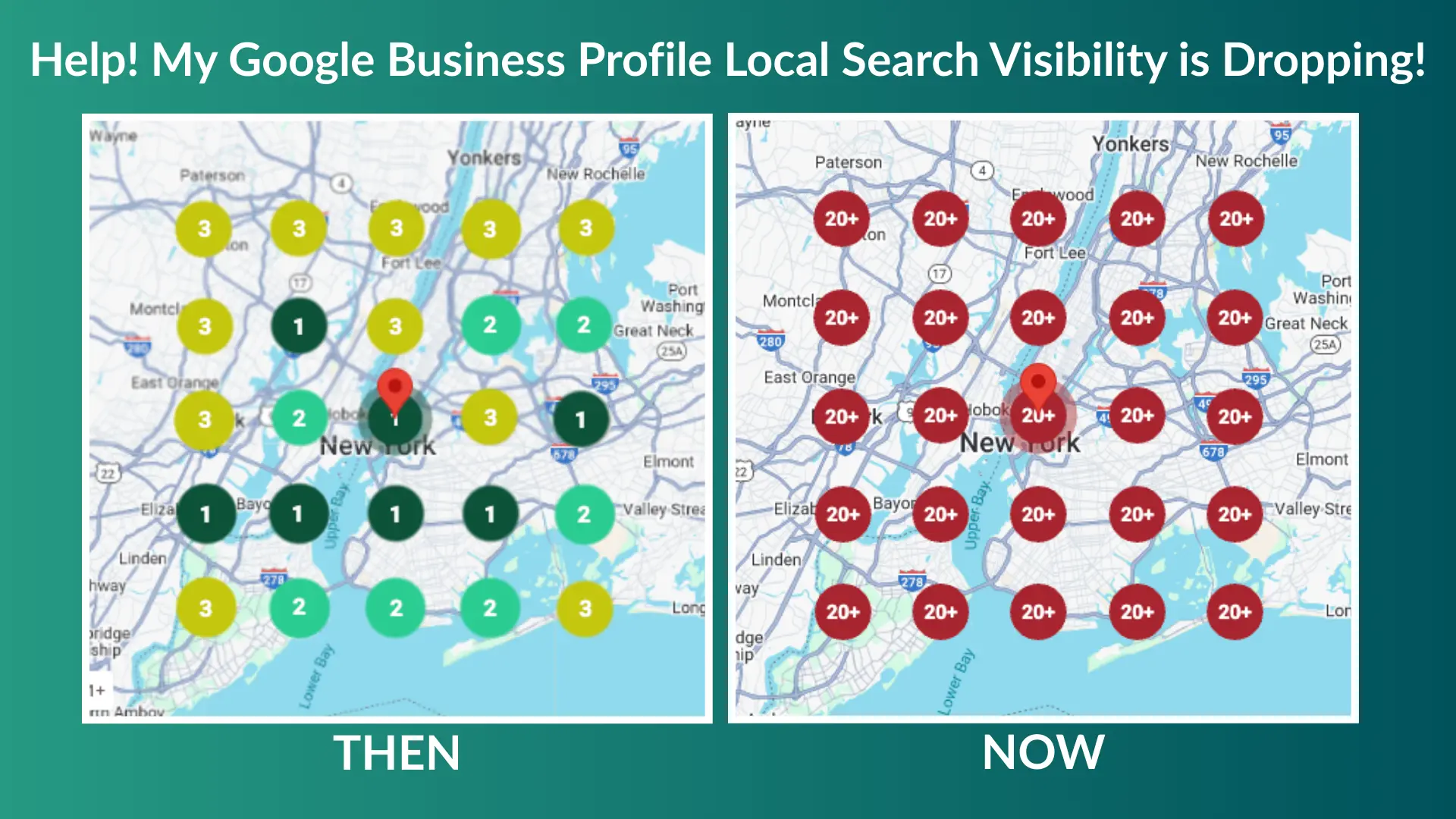
Treat the Drop as a Pattern, Not a Screenshot
Record the first affected date, queries, locations, devices, and result types. Separate branded searches, service searches, “near me” searches, and searches containing a town or neighborhood because each can expose a different failure.
Compare like with like. A map-grid scan taken from new coordinates, a rank tracker that changed settings, or a search performed while travelling can create an apparent decline even when customers near the business see little change.
Google explains that local results are mainly based on relevance, distance, and prominence. That framework is useful for classification, but it does not let a business calculate or reverse-engineer a position.
Use the P-W-C-D Diagnostic
Review four layers in order: Profile, Website, Competitors, and Demand. Give every observation a date, evidence source, affected search set, and confidence level so an assumption does not become a repair merely because it sounds plausible.
Profile covers eligibility, accuracy, relevance, and trust. Website covers crawlability, landing-page fit, local evidence, and conversion. Competitors cover changes in who is eligible and compelling. Demand covers seasonality, search language, location, and customer behavior.
Inspect the Business Profile for Material Changes
Start with ownership and verification status, then review the primary category, additional categories, business name, address or service area, phone, website URL, hours, services, and status. Compare the live profile with dated screenshots, change logs, confirmation emails, and the facts shown on the official website.
Category edits deserve particular attention because Google states that categories affect local ranking and advises choosing a specific primary category that best describes the business. Its business-category guidance also warns that an edit may trigger reverification.
Look for suspended features, rejected edits, duplicates, merged listings, unintended user suggestions, a closed label, or a landing-page URL that redirects incorrectly. Do not keep changing categories or locations to “wake up” the listing; repeated unverified edits add risk and make the timeline harder to interpret.
Test the Website as a Local Evidence System
Confirm that the linked landing page returns a successful response, is indexable, renders important content on mobile, and presents the same core business facts as the profile. Test its phone, forms, booking links, directions, and lead routing rather than assuming that a ranking loss is the only business problem.
Check whether a redesign, migration, template update, canonical change, noindex directive, server incident, or internal-link edit coincides with the decline. In Search Console, segment queries and pages around the affected service and location instead of judging the entire domain by one average trend.
The page should explain what the business does, who it serves, where the service is genuinely available, and what evidence supports that claim. Google’s guidance on establishing business details recommends claiming the profile, verifying the official site in Search Console, and using accurate business information and structured data where appropriate.
Examine Competitor and Market Movement
A business can lose relative visibility without becoming technically worse. A closer competitor may open, an established company may adopt a more relevant category, or another provider may earn stronger reviews, links, local coverage, and customer engagement.
Create a dated comparison for the searches and coordinates that declined. Record which competitors entered or left the visible set, their category and location, the services described on their websites, review patterns, landing-page quality, and credible local mentions.
For businesses facing overlapping profile, website, and market signals, Gunita Jain for local SEO provides a relevant point of reference for connecting Business Profile evidence with technical and commercial analysis. The diagnosis still needs the business’s own access, history, service area, and customer data.
Separate Visibility Loss From Demand Loss
Compare Business Profile searches, views, calls, website clicks, bookings, and directions with Search Console impressions, Analytics sessions, qualified leads, and sales outcomes. Google’s Business Profile performance guidance notes that metrics have different counting rules and that only applicable interactions appear.
A seasonal decline may reduce demand across several businesses, while a tracking failure may reduce recorded calls without changing visibility. Brand searches can remain stable while non-brand discovery falls, or visibility can hold while conversion weakens because prices, availability, reputation, or follow-up changed.
Consider a hypothetical home-care provider that appears to fall across a city. The decline begins after its rank-tracking grid moves, but Search Console impressions remain stable near its real service area; meanwhile, form completions drop because a mobile validation error prevents submission.
The correct response is to restore comparable tracking and repair the form, not rewrite every location page. A second provider whose priority pages became non-indexable after a migration would require a technical repair before reputation or competitor work.
Run a Controlled Recovery Sequence
During the first 48 hours, preserve exports, screenshots, profile history, website release notes, and competitor samples. Classify findings as confirmed cause, likely contributor, contextual change, or unsupported idea.
During the first week, fix only proven eligibility, access, integrity, and measurement failures. Correct inaccurate profile facts, restore broken landing pages, resolve restrictions through the proper process, and validate critical customer actions.
Over the next month, improve durable weaknesses such as thin service evidence, neglected reviews, weak local mentions, confusing internal links, or poor conversion paths. Assign an owner, deployment date, expected effect, and review window to every change.
Recovery may not appear immediately because recrawling, profile review, customer demand, and competitive conditions operate on different timelines. A sound diagnosis reduces uncertainty and protects the business from making ten simultaneous changes to solve a drop that only one of them caused.
About Gunita Jain
Gunita Jain is an SEO and digital marketing specialist with more than 15 years of experience helping businesses improve organic and local visibility. Her work covers Google Business Profile optimization, technical and content audits, Search Console, Google Analytics, keyword research, competition analysis, and conversion-focused website improvements. A Top Rated Plus professional with a 99% Job Success score, she emphasizes evidence-based priorities and realistic measurement across international client projects. Learn more at Gunita.services.