The Ultimate Guide to Bubble Mew PSA 10: Value, Rarity, and Collecting Insights
In the vibrant world of Pokémon Trading Card Game collecting, few modern cards have captured the imagination of enthusiasts quite like the Bubble Mew. This Special Illustration Rare from the Paldean Fates set has become a defining chase card of the Scarlet & Violet era. When graded to perfection, a bubble mew psa 10 represents the pinnacle of condition and desirability for many collectors. This comprehensive article explores every aspect of this iconic card, from its origins and artwork to market trends, grading considerations, and long-term appeal.
Understanding the Bubble Mew Card
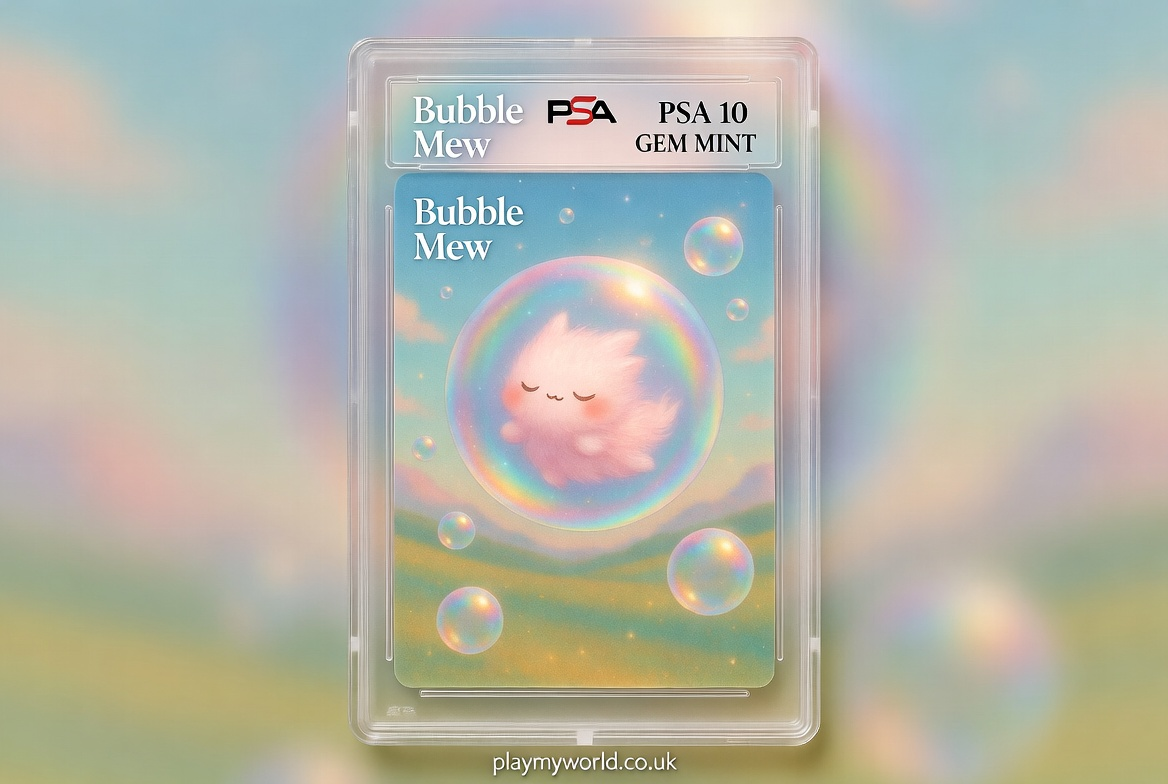
The Bubble Mew refers to the Mew ex Special Illustration Rare released in the English Paldean Fates set in January 2024. Officially numbered 232/091, the card features a shiny version of the mythical Pokémon Mew floating peacefully inside a large translucent bubble. The surrounding scene includes soft countryside elements and other small Pokémon, creating a dreamlike, storybook atmosphere.
The nickname “Bubble Mew” arose naturally from the artwork. Collectors quickly adopted the name because the central visual element is the bubble surrounding Mew. The illustration was created by USGMEN, whose soft, whimsical style stands out among more action-oriented Pokémon card designs. This gentle aesthetic has contributed significantly to the card’s lasting popularity.
A Japanese counterpart exists in the Shiny Treasure ex set, numbered 347/190. While the artwork shares the same core concept, differences in language, printing, and market dynamics create distinct collecting paths for each version. The English Bubble Mew has generally commanded higher prices in Western markets, though the Japanese version remains highly sought after for its accessibility and population data.
The Allure of the Artwork
What makes the Bubble Mew special extends beyond rarity. Many chase cards rely on powerful characters or dynamic battle scenes. This card instead emphasizes calm and charm. Mew appears relaxed and content, framed by iridescent bubbles that catch light in the printed texture. The soft color palette and balanced composition make the card highly displayable.
Collectors often note that the design feels nostalgic, almost like a children’s book illustration brought to life on cardboard. This emotional connection has helped the card maintain strong demand even as other modern hits rise and fall. The shiny form of Mew adds another layer of appeal, as shiny variants of legendary and mythical Pokémon remain perennial favorites.
Release Context and Set Significance
Paldean Fates arrived as a special set focused on shiny Pokémon. It followed the main Scarlet & Violet expansions and offered collectors a chance to pursue alternate art and high-rarity pulls. Within that context, the Bubble Mew emerged as one of the set’s signature cards. Pull rates for Special Illustration Rares are intentionally low, which immediately established scarcity.
Over time, the card’s reputation grew. Early prices were relatively modest compared to today’s figures. As more collectors recognized the artwork’s uniqueness and Mew’s enduring popularity, demand increased. Market fluctuations followed typical modern card patterns—initial hype, temporary corrections, and subsequent recoveries driven by genuine collector interest rather than pure speculation.
Why PSA 10 Matters for Bubble Mew
Professional grading plays a central role in the high-end Pokémon market. PSA, or Professional Sports Authenticator, remains one of the most recognized grading companies. A PSA 10 grade signifies Gem Mint condition: perfect centering, sharp corners, clean edges, and a surface free of imperfections under their standards.
For modern cards like the Bubble Mew, achieving a PSA 10 is more challenging than many expect. Special Illustration Rares often feature textured surfaces and full-art designs that can reveal minor print lines, surface scratches, or centering issues more readily. Population reports show that while thousands of copies have been graded, the percentage receiving a perfect 10 remains selective.
Owning a bubble mew psa 10 therefore carries prestige. It confirms the card meets the highest condition standards and typically commands a substantial premium over raw or lower-graded copies. Collectors who submit cards for grading carefully inspect for whitening, surface marks, and centering before sending them in, as the cost of grading and the risk of a lower grade must be weighed against potential value increases.
Market Value Trends
Prices for Bubble Mew have shown notable movement since release. Ungraded near-mint copies have traded in ranges that climbed from under one hundred dollars in early periods to several hundred dollars at peaks. Graded examples, particularly PSA 10s, have reached significantly higher levels, with sales frequently reported in the low-to-mid thousands depending on market conditions and specific timing.
A standout moment occurred when a BGS Black Label 10 version—representing perfect subgrades across all categories—sold at auction for a record-breaking six-figure sum. While that extreme example involves an ultra-rare grading outcome, it underscored the ceiling potential for top-condition Bubble Mew cards and elevated overall interest in the card.
Japanese versions generally trade at lower absolute prices than English counterparts, reflecting differences in supply, language preference, and regional demand. Population data for Japanese PSA 10s tends to be higher, which influences relative scarcity perceptions.
Factors influencing value include overall Pokémon market health, new set releases that may shift attention, condition population reports, and broader collector sentiment toward modern versus vintage cards. The Bubble Mew has demonstrated resilience, often recovering from dips more strongly than many contemporaries.
Grading Considerations and Challenges
Submitting a Bubble Mew for PSA grading requires careful preparation. Collectors examine the card under good lighting and magnification for any surface imperfections. Centering is critical; PSA has strict tolerances for left-right and top-bottom balance. Corners must show no whitening or softness, and edges need to remain sharp.
Many full-art SIRs prove difficult to grade perfectly because of their large illustrated areas. Minor factory print imperfections that might be overlooked on simpler cards can become noticeable. As a result, the population of true PSA 10s grows more slowly than overall graded numbers, supporting premiums for the highest grades.
Some collectors prefer to hold raw high-quality copies or seek already-graded examples to avoid submission risks and wait times. Others view the grading process as part of the hobby’s engagement, accepting that not every card will achieve the top grade.
Buying and Authentication Advice
When seeking a bubble mew psa 10, buyers should prioritize reputable sources. Established auction houses, specialized card dealers, and major online marketplaces with strong buyer protection offer greater security. Verifying the PSA certification number against the official population report helps confirm authenticity of the slab and grade.
Visual inspection of the slab itself remains important. Check for proper labeling, clear plastic without damage, and consistent appearance with known authentic examples. High-value cards attract counterfeiters, so caution is essential. Comparing recent sales data provides realistic price expectations and helps avoid overpaying during temporary spikes.
For those considering raw cards with the intention of grading, thorough personal evaluation or professional pre-grading opinions can improve outcomes. Understanding the card’s known print tendencies helps set realistic expectations.
Investment Perspective and Long-Term Outlook
Modern Pokémon cards carry different risk profiles than vintage counterparts. Larger print runs mean absolute scarcity is lower, yet strong demand for specific popular cards can still drive values higher. The Bubble Mew benefits from several positive factors: iconic subject matter in Mew, distinctive and beloved artwork, a memorable nickname that aids recognition, and consistent collector discussion.
Its performance relative to other Scarlet & Violet chase cards has been impressive. While some cards experience sharp declines after initial hype, the Bubble Mew has shown an ability to establish higher floors after corrections. This pattern often indicates underlying collector demand rather than pure speculative interest.
Future value will depend on continued popularity of Mew, the overall health of the TCG collecting market, and whether new high-profile Mew cards emerge that compete for attention. Anniversary sets or special promotions featuring Mew could influence sentiment in either direction. Diversification remains wise for anyone treating cards as investments.
Japanese Versus English Versions
The Japanese Bubble Mew from Shiny Treasure ex arrived earlier and features similar artwork with language differences. Japanese cards often appeal to collectors who appreciate the original-language releases and sometimes different texture or print quality characteristics. Population reports for Japanese PSA 10s tend to be higher, which can moderate prices compared to the English version.
Many collectors pursue both versions for completion or because they prefer one language’s aesthetic. The English card generally holds stronger value in international markets outside Japan, while the Japanese version offers a more accessible entry point for those wanting the same artwork at lower cost.
Display and Collection Integration
Beyond financial considerations, the Bubble Mew shines as a display piece. Its soft colors and peaceful composition work well in binders, protective cases, or framed presentations. Many collectors highlight it as a centerpiece in modern Scarlet & Violet collections or broader Mew-focused sets.
Pairing it with other Mew cards from different eras creates interesting historical narratives, from early promotional releases through contemporary illustration rares. The contrast between older, simpler designs and the detailed Bubble Mew artwork illustrates the evolution of Pokémon card artistry.
Common Pitfalls to Avoid
New collectors sometimes overpay during peak hype periods or overlook condition details when purchasing raw cards. Others rush into grading without proper inspection, leading to disappointing results. Relying solely on one marketplace without cross-checking recent sales data can also result in suboptimal purchases.
Patience often rewards collectors. Markets for popular modern cards move in cycles, and waiting for quieter periods can yield better opportunities. Building knowledge of grading standards and population trends improves decision-making over time.
The Broader Context of Modern Chase Cards
The success of the Bubble Mew reflects larger trends in Pokémon collecting. Special Illustration Rares and alternate arts have become major drivers of set interest. Cards that combine popular Pokémon with standout artistic direction frequently outperform purely competitive or standard-rarity counterparts in the secondary market.
Nicknames play a surprisingly important role. Cards that acquire catchy, descriptive names like Bubble Mew tend to stick in collective memory and facilitate discussion, which supports ongoing demand. This phenomenon appears across several high-profile modern cards.
FAQs About Bubble Mew PSA 10
What exactly is a Bubble Mew?
It is the community nickname for the Mew ex Special Illustration Rare (232/091) from the English Paldean Fates set, known for its artwork showing shiny Mew inside a bubble.
Why is a PSA 10 version so valuable?
A PSA 10 confirms Gem Mint condition according to rigorous standards. Perfect examples of popular modern SIRs remain relatively scarce, creating premiums over raw or lower-graded copies.
How difficult is it to get a PSA 10?
Full-art Special Illustration Rares can be challenging due to surface visibility and centering requirements. Many submitted cards receive 9s or lower, keeping the 10 population selective.
Is the Japanese version the same card?
It features the same core artwork concept from the Shiny Treasure ex set but differs in language, set numbering, and market dynamics. Both are highly collectible.
Should I grade my raw Bubble Mew?
Only if the card appears exceptionally clean upon close inspection. Grading costs and turnaround times should be considered against the potential value increase and risk of a sub-10 grade.
How has the price changed over time?
Values started lower at release, rose with recognition of the artwork, experienced typical modern-card volatility, and have established higher ranges for both raw and graded examples, with top grades commanding significant premiums.
Is Bubble Mew a good long-term hold?
Many collectors believe its combination of popular subject, distinctive art, and established nickname supports lasting appeal, though all collectibles carry market risk.
Conclusion
The Bubble Mew has earned its place as one of the most recognizable and desirable modern Pokémon cards. Its peaceful, distinctive artwork, connection to the beloved mythical Pokémon Mew, and strong collector following have driven sustained interest. For those seeking the highest condition standard, a bubble mew psa 10 stands as a premium representation of the card’s appeal. Whether pursued for display, completion of a collection, or as part of a broader interest in Pokémon TCG, the Bubble Mew continues to reward attention with its unique charm and market presence. Collectors who take time to understand its background, grading nuances, and market behavior position themselves to appreciate this special card fully.